SahamLens
SahamLens is a local-first trading intelligence platform built for Indonesian stock investors, with a primary focus on the Indonesia Stock Exchange (IDX). The project was designed as a unified workspace for market research, technical analysis, portfolio monitoring, journaling, and AI-assisted decision support, so that investment workflows can be managed in one environment rather than across multiple disconnected tools.
Background
Retail stock investing often involves fragmented workflows. Investors typically move between charting platforms, brokerage applications, news sources, spreadsheets, notes, watchlists, and personal journals to complete a single research or trading process. Even for relatively simple decisions, the workflow can become repetitive: checking price action in one place, reading market news in another, reviewing watchlists elsewhere, and manually tracking portfolio decisions in a separate tool.
This fragmentation creates several problems. First, research context becomes scattered across different applications, which makes it harder to review a stock holistically. Second, repeated switching between tools increases friction in day-to-day analysis and makes disciplined execution more difficult. Third, many retail workflows end up depending on external dashboards or signal-style products that surface isolated information but do not help investors build a structured decision process of their own.
SahamLens was built to address that gap. The goal was to create a local-first platform where investors can centralize market monitoring, stock research, technical analysis, portfolio review, and trade journaling into a single workspace. Rather than functioning as a signal-selling product or a brokerage replacement, the platform is designed to support investor judgment by organizing relevant data, context, and decision workflows in one place.
What the project does
SahamLens serves as an integrated research and decision-support platform for Indonesian stock investing. It combines multiple layers of investment workflow that are often handled separately:
- market data and price monitoring
- technical analysis and indicator-based chart review
- AI-assisted research summaries and stock analysis support
- watchlist and stock-tracking workflows
- portfolio monitoring and performance review
- trading journals and post-trade reflection
- risk management and position-sizing support
The project is built around the idea that investment software should not only display information, but also help structure how information is reviewed and turned into decisions. In practice, this means SahamLens is designed less as a dashboard for passive observation and more as a workspace where an investor can move from market scanning, to stock review, to trade planning, to post-trade analysis without leaving the same environment.
What I built
I built SahamLens as a local-first web platform that centralizes stock research and investor workflow management for the Indonesian market. The system brings together market-facing analysis features and user-facing decision tools in a single application, with an emphasis on making the platform practical for repeated daily use rather than limiting it to one-off analysis sessions.
The core areas I worked on include:
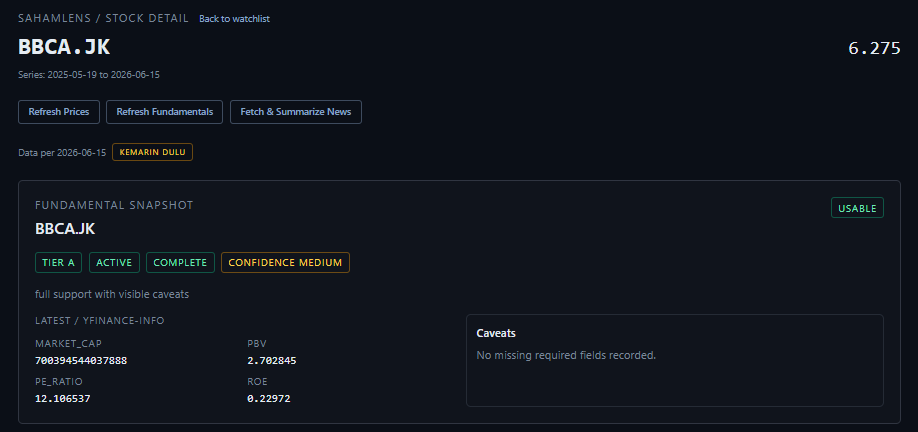
- building stock watchlist and market monitoring workflows for tracking selected IDX equities
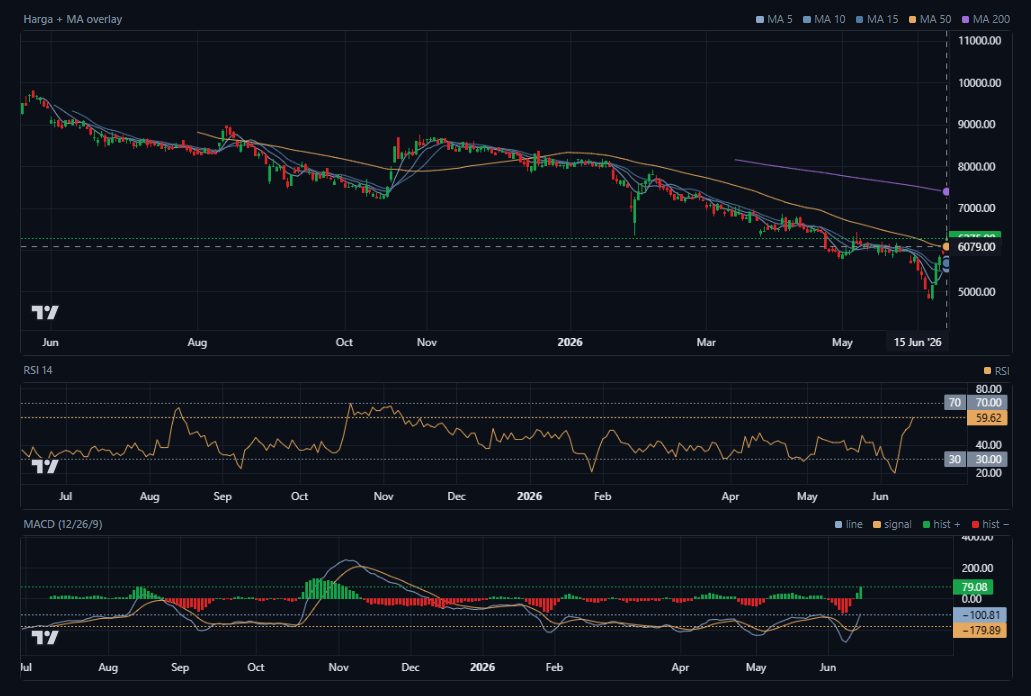
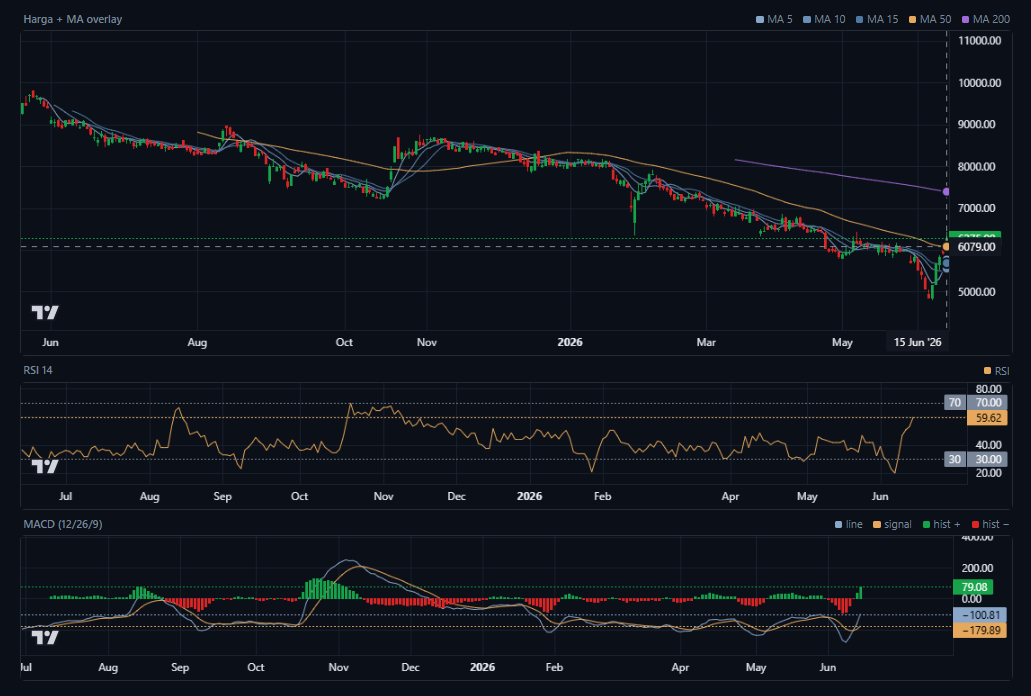
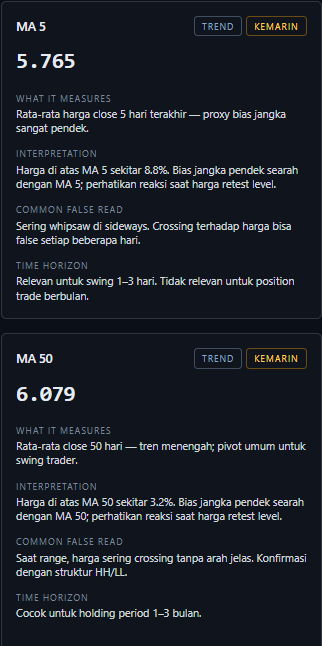
- integrating technical indicators and chart-based analysis tools to support market review
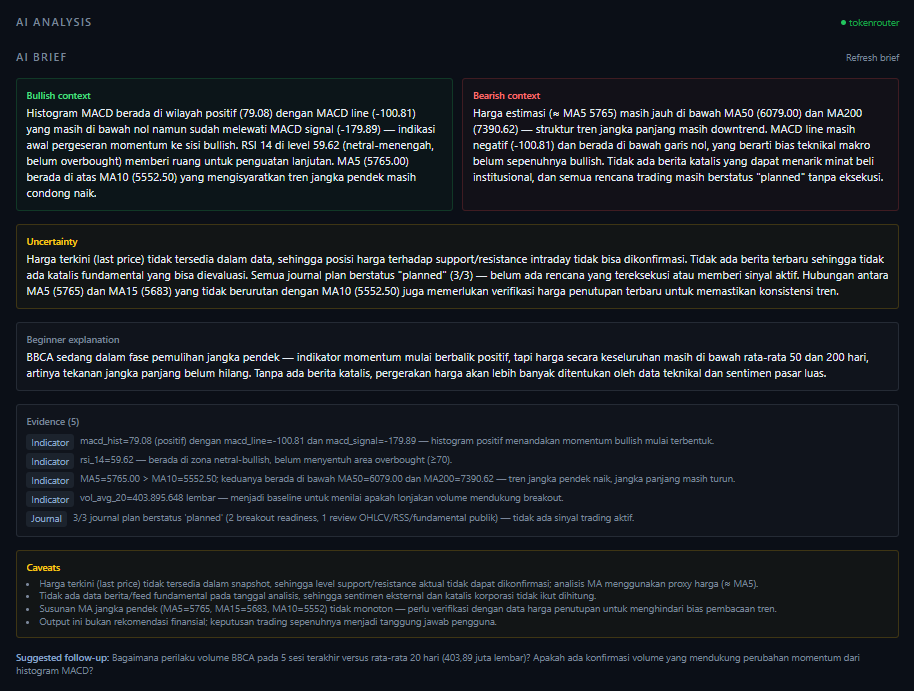
- designing AI-assisted research features for summarizing information and accelerating early-stage stock analysis
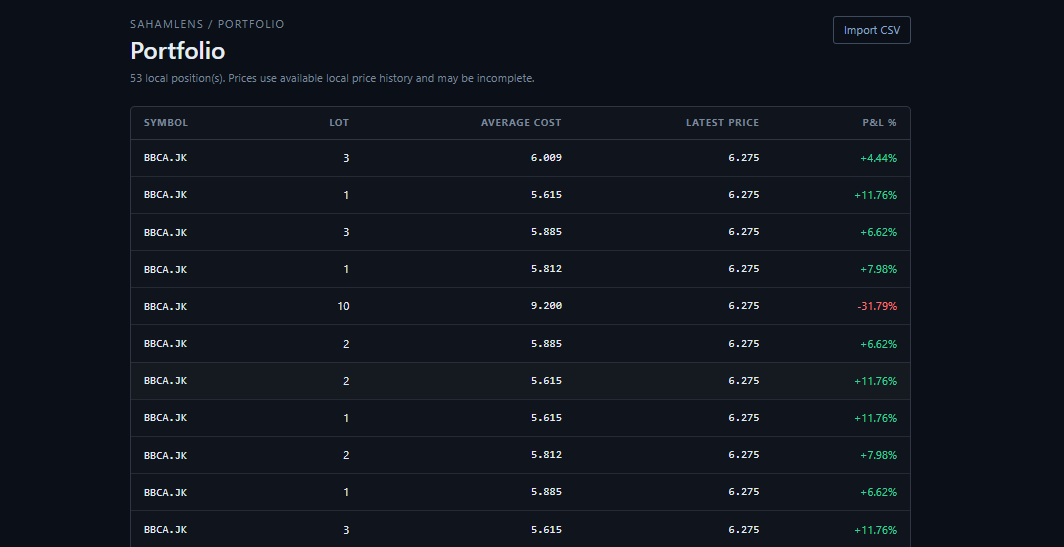
- adding portfolio tracking capabilities to monitor holdings and investment performance
- implementing trading journal workflows for documenting trade rationale, review notes, and post-trade reflections
- adding decision-support tools such as risk management and position-sizing support
- structuring the platform around local-first storage and analysis so data remains close to the user’s own environment
The result is a system where investment-related information is not scattered across multiple tools, but instead connected inside a workflow that supports both research and execution.
Product structure and workflow design
A major part of SahamLens is not only the presence of individual features, but how those features are connected into a coherent research workflow. Many stock tools are strong in one area, such as charting, portfolio display, or market screening, but do not help much once the user needs to move between those contexts. SahamLens was designed to reduce that disconnect by treating investment work as a sequence of related activities rather than as isolated feature pages.
1. Market monitoring and stock review
The platform provides watchlist and stock-tracking capabilities so users can monitor selected equities and revisit them over time. This creates a stable set of symbols and contexts around which further analysis can be organized, rather than forcing every review process to start from scratch.
2. Technical analysis as part of a broader workflow
Technical indicators and chart-based analysis are included as one layer of decision support, but not as the entire product. The intention is to place technical analysis alongside research notes, market context, and portfolio considerations, so that chart signals can be interpreted within a larger decision process instead of being treated as standalone triggers.
3. AI-assisted research support
SahamLens includes AI-powered research assistance to help summarize information, accelerate stock review, and reduce manual overhead in early-stage analysis. The role of AI here is not to replace investor judgment or generate automatic trade decisions, but to make research workflows more efficient by helping organize and interpret information more quickly.
4. Portfolio and post-trade visibility
Investment decisions do not end when a trade is placed. Because of that, SahamLens also includes portfolio monitoring and journaling workflows so users can track positions, review outcomes, and document reasoning behind entries and exits. This makes the platform useful not only before a trade, but also after one, when performance review and process improvement become important.
5. Local-first control over workflow data
The platform is designed around a local-first architecture, which supports faster iteration, greater control over user data, and a more self-contained research environment. For a product that stores watchlists, journals, portfolio records, and research context, local-first design also reduces dependence on fully cloud-centric workflows and allows the system to function more like a personal investment workspace.
Technical focus
The technical challenge in SahamLens was not simply aggregating market information, but designing a system that could make different types of investor workflow data coexist in a useful way. Market prices, technical indicators, research notes, AI-generated summaries, portfolio records, and journal entries all serve different purposes, and the platform needed to support those differences without turning the interface into a disconnected collection of unrelated tools.
That led to several technical priorities during development:
- designing a data model that can support watchlists, market information, portfolio records, and journaling in the same system
- building technical analysis and market monitoring features in a way that remains useful for repeated day-to-day review
- integrating AI-assisted research without turning the product into a black-box recommendation engine
- supporting risk management and trade review workflows as first-class parts of the platform rather than optional extras
- using a local-first architecture so the application can remain responsive, user-controlled, and practical for iterative development
From an engineering perspective, the platform is less about producing a single “best stock idea” and more about creating an environment where research inputs, analysis tools, and decision records are connected in a way that improves process quality over time.
Current scope
The current implementation of SahamLens covers the core building blocks required for a personal trading intelligence workspace for IDX investors, including:
- watchlists and stock monitoring
- technical indicators and market analytics
- AI-assisted research and stock summaries
- portfolio tracking and performance review
- trading journal and post-trade review workflows
- risk management and position-sizing support
- local-first storage and analysis workflows
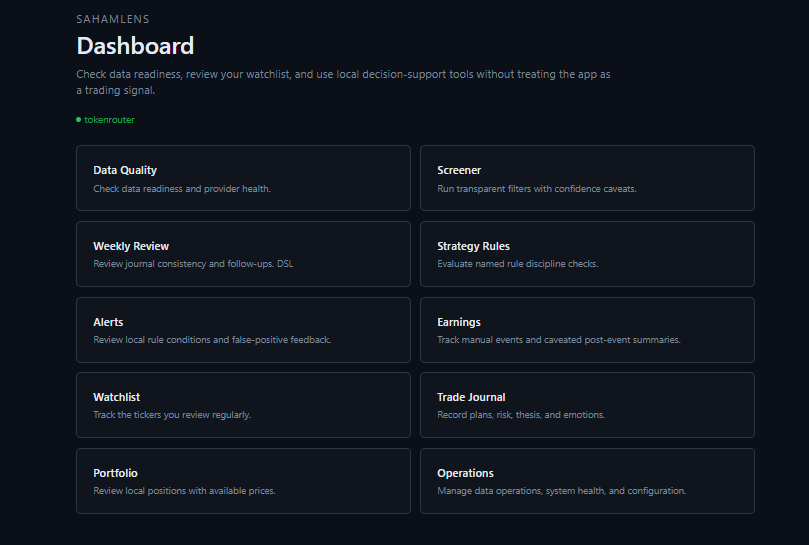
- a web-based dashboard for day-to-day investment decision support
The project is intended as an evolving internal platform rather than a static demo, with development focused on improving the quality of investor workflows, reducing context fragmentation, and making stock research more structured and repeatable.
Outcome
The result is a local-first trading intelligence platform that brings together multiple parts of the retail investing workflow into one system. Instead of relying on separate tools for charting, note-taking, stock research, portfolio review, and journaling, SahamLens provides a unified environment where those activities can be connected and revisited over time.
In practical terms, the project demonstrates how investment software can be designed not only to display market information, but also to improve the structure of decision-making around that information.
Key takeaway
One of the main takeaways from building SahamLens was that investment tools become more valuable when they improve process quality rather than simply increasing information volume. The most useful parts of the platform were not the ones that attempted to automate judgment, but the ones that reduced workflow fragmentation, organized context, and made trade review more disciplined.
The project also reinforced the value of local-first architecture for personal analytical software. Keeping the workspace local makes experimentation faster, gives the user more control over their data, and supports a workflow that feels closer to a personal research terminal than a generic web dashboard.